Showing posts with label music. Show all posts

Saturday, September 28, 2013

I Am Iron Man

Just watched Iron Man 3 last night. I missed it in the theatres when it came out because I’m no longer into seeing loud, violent movies that much anymore, but I got the chance to watch the DVD for free and was pleasantly surprised to find that it was a decent enough picture. So what I would like to talk about today is film scores.


See, while Iron Man 3 was a pretty good popcorn flick with some actual intelligent themes thrown in, the music was pretty much a non-entity. I had never even heard of the guy who did the music when I glimpsed his name in the credits. And this got me to thinking that it has been a long time since I have run into a film score that was actually good, or even memorable (I think Howard Shore’s scores for the Lord of the Rings movies were the last decent batch that I’ve heard and that was what – 10 years ago?). Amongst the many faults of the new reboot Star Trek film series (and that is a whole other post that I don’t want to do because I try to be a positive person) is the music or lack thereof, and I remember feeling disappointed that the score for a film series that should contain great music was instead bland, generic and forgettable. Likewise, everyone oohed and awed over the Nolan trilogy of Batman movies and I found them entertaining enough, but the Hans Zimmer scores did nothing for me. I don’t necessarily need catchy hooks at every point in the score – that’s not what film soundtracks are necessarily for – but even the main theme was forgettable… I literally could not hum for you Zimmer’s main Batman theme (same goes for Giacchino’s Star Trek theme). If you can’t even give the main theme of your movie a memorable melody, then people, you got problems.

I think the main problem is that a lot of film composers are just that – film composers… they don’t attempt to do any music outside film music. They are also influenced by previous film composers *only*, and that is a huge problem. See, the whole thing is that the movie composers of 25+ years ago (the generation back from the current crop) is that they were directly influenced by the classical composers (and sometimes jazz and folk music of various cultures) like Wagner, Strauss, Stravinsky and so on (but mainly Wagner). I actually watched a documentary on TV a few months ago about film music and they had interviews with some of these new movie composers, and these guys were going on and on about how they were influenced so much by these other film composers (most of whom weren’t even dead yet) and they weren’t mentioning any other forms of music and I thought, “it figures… all these new scores sound like rehashed scores from twenty years ago, which in turn rehashed classical music from a hundred years ago.” So what we have today (for the most part) is composers getting music filtered through a filter of a filter.

That’s why the film scores of yesteryear are better (god, I sound like a total geezer). See, the composers actually listened to classical music and jazz and other stuff and it directly influenced how they wrote music. Yeah, their stuff is derivative but it still sounds good, dammit.

So to end this post on a positive note, I'm gonna share some of my favorite film scores and explain what they mean to me (I'm a selfish bastard).

Conan the Barbarian (1982) - My favorite film score of all time.  Yes, it is derivative of Wagner (there's something new), Orff's Carmina Burana and Richard Strauss amongst others, but you know what?  Basil Poledouris' music moves me.  I feel anger, love, joy, tragedy, triumph and even a few emotions I can't name.  I love it so much that I bought it twice.  You wouldn't expect that from a score to an eighties barbarian fantasy epic, would you?

Ben-Hur (1959) - Poledouris was also influenced by Hungarian composer Miklós Rózsa, who scored this film (in fact Rózsa was his music teacher).  And what a score!  This is another one that moves me emotionally. I get tears in my eyes when I hear the overture.  The overture!  And the Rowing Of The Galley Slaves theme has become the mental soundtrack to my menial work over the years... every time I work retail I can almost hear "Battle Speed!"

Star Trek: The Motion Picture (1979) - Now this is Star Trek music.  Jerry Goldsmith is the greatest American film composer who ever lived.  He knew how to score a scene and give the audience an emotional and musical punch in the stomach.  TMP actually becomes a better movie because of its music.  Yeah, large swaths of it are ripped off from Daphnis et Chloé, but that's an awesome piece of music so I'm not gonna complain too much.

The Adventures of Robin Hood (1938) - Old-timey goodness from Erich Wolfgang Korngold.  Korngold was also an opera composer, and it shows in his film scores.  Again, massive Wagnerian influence (detecting a theme here....).  When you hear this music you will want to leap up and wave a sword around Errol Flynn style.  Don't do it though because you will never be as cool as Errol Flynn.  The quieter bits are great too.  All-around near perfect.

Raiders of the Lost Ark (1981) - Already covered this one in my love letter to that movie.  John Williams is an overrated composer who liberally rips from the classics (more than others, anyway) but this score is one of the greatest ever.  And my favorite moment isn't even the rousing march or the exciting action music - it's the theme for the ark itself.  Ancient, eerie, enigmatic and powerful... when I hear that theme I am transported back 3000 years into an ancient world of mystery.  It sends shivers down my spine.

Alexander Nevsky (1938) - Another movie from '38.  This one is by an actual classical composer:  Sergei Prokofiev, who basically invented the action movie score with his music for this Stalin-era Soviet propaganda pic.  The Battle On The Ice theme is awesome, and massively influenced movie scoring for years to come.  It  was actually used in the teaser trailer for Conan the Barbarian... oh yeah, I forgot to mention Prokofiev as an influence on that score earlier.  Oops.

The Good, The Bad and The Ugly (1966) - Cue Ennio Morricone.  Another classic film, another classic score.  An interesting thing about Morricone's take on the music for this classic western is in his use of the leitmotiv.  While most composers (including you-know-who) use a certain melody for different characters or ideas in a piece of dramatic music, Morricone uses the same melody but played in a different way for the three eponymous main characters, symbolizing how each alike they all are at the core and how all three are aspects of humanity in general.  Ooh, deep.


Well, that's it.  Seven scores I love.  There are more, but I'll save gushing about them for another day.

Until then....

Friday, March 15, 2013

Ars On The Ides Of Mars

This month on Netflix I happened to watch two biopics about two artists, both based on novels, produced ten years apart, depicting men who lived roughly 300 years apart and who made two different types of art.  I hadn't actually intended to do this but once I watched both I started to draw some parallels and make some comparisons - as well as think about how one could be so good and one could basically suck.  Today I give you a short, badly written essay on a comparison and contrast of Magic Fire and The Agony And The Ecstasy, or "How To and How Not To Do a Biographical Movie About An Artist".

Magic Fire is about the life of Richard Wagner (whose bicentennial is this year, incidentally) made in 1955 by Republic Pictures, which by that time was on its last legs as a viable film studio.  The Agony and The Ecstasy is a film about Michelangelo Buonarroti and his painting of the Sistine Chapel ceiling produced in 1965 and starring Charlton Heston as the tortured artist and Rex Harrison as the warrior pope who commissions him to create the great work.

The difference between the two is like night and day.  Magic Fire is a cheesy biopic which tries to compress the entire life of the most important and influential composer of music next to Bach and Beethoven down into two hours and achieves in telling us nothing about the man or how monumental his work is and how it affected all of the art of the nineteenth century and beyond.  To director William Dieterle, the whole thing is just an exercise in showing how Wagner could be something of a vain egotist while making some pretty music and pining after a series of women, instead of showing how truly radical his ideas were, while maybe even showing some of the man's truly dark tendencies and his genuinely complex relationships with the other human beings in his life.  This movie could have been an opportunity to show the paradox of the artist and the dichotomy between what a man is and the art that he can produce.  But alas, Dieterle just gives us a shallow, melodramatic two hours of nothing.  There is no dramatic point to this massive cheese-beast.  The film zooms along from one point in Wagner's life to another - it all feels so scatter-shot.  The actors don't look like the historical personages that they are supposed to portray.  There are historical inaccuracies (a given in any historical picture).  Even the music, which should of course be a highlight is arranged by Erich Wolfgang Korngold in a choppy "best of" manner which never even lets us hear a whole selection before it's off into another cornily played bit from another opera. Oh well, at least it was filmed on location in Europe so some of the backgrounds are accurate (and pretty).

The Agony And The Ecstasy attempts to do the opposite - give us just one incident in the life of Michelangelo and build a dramatic conflict and exploration of an artist around it.  Directed by Carol Reed, this movie accomplishes what the last film does not.  We are presented with real questions - what drives an artist to create?  How far will he go to do it?  How does one find one's purpose in life?  How does the relationship of one person to another affect their work or vice versa?  What is the true impact of our lives on this world?  What the answers to some of these questions are of course will be up to the viewer which is the beauty of this movie - everything is not laid out on a platter and the viewer must find their own meaning.  The direction and the acting are better, too.  Charlton Heston gives a great account as Michelangelo, making him both sympathetic and infuriating, sometimes all at he same time.  Rex Harrison is of course basically Rex Harrison for the duration of the movie but manages to portray both Pope Julius' violent arrogance and surprising humility in the face of true art and beauty.  The interplay between the two is classic - this film works as a character study in itself in addition to the qualities I have mentioned.  They even manage the illusion of the Sistine Chapel being in the process of being painted, which must have been truly challenging.  The only things I didn't like were the tacked-on semi-romantic subplot (standard in movies of the 1950s and 60s but thankfully not overdone here) and the twelve minute art history lesson in the beginning.  It's rather clunky and unnecessary - I know who Michelangelo was and what his major works were, thanks.

In the end the recommendation is obvious - The Agony And The Ecstasy is a classic film worthy of any Netflix queue, whilst Magic Fire should be viewed by die-hard Wagner fans only, and only if they feel slightly masochistic... while getting a few chuckles from it over how corny it is.  And to all the directors out there not reading this I say:  when making a bio film of a great artist, try to focus on one work or point in their life and how it affected them and the world and try to give us some real drama out of it, instead of trying to cram the totality of their life and work into a short time-span, making everything empty and pointless.  

Ah, who am I kiddin'. 

Tuesday, December 25, 2012

Merry Straussmas!

Everyone has a Christmas tradition. Even Jews and Atheists – I smell cheap Chinese food and a bad holiday horror movie! If you’re me you sit on the couch and watch Richard Strauss operas all day. This is a personal holiday tradition that goes back a long way, all the way to today, because that’s when I made it up. Anyways, to compensate for a total lack of posts in November (still recovering from the election, actually) let’s get a double dose of great music and warm and fuzzy feelings from the composer of Also Sprach Zarathustra. So sit back, get yourself a nice mug of hot chocolate and cookies and enjoy this Super Review of


-and-


Films, 1974 & 1981
Director: Götz Freidrich


You know, it’s too bad that more operas aren’t made into movies. Sure, there are plenty of tapings of live performances (and some damn good ones, I might add) but for me complete immersion in the drama only comes when I can’t see any curtains or orchestra or hear the really annoying COUGHING in the audience. These two films, both from German director Götz Freidrich are a revelation: both visually and dramatically engaging. The direction by Freidrich is very good – you feel like you are watching a film instead of just a performance. Sure, sometimes the dude rips from Sergio Leone and gives us some unnecessary extreme close-ups


Cue Ennio Morricone.

but most of the time it works and really sucks the audience into the drama, which is the whole point.

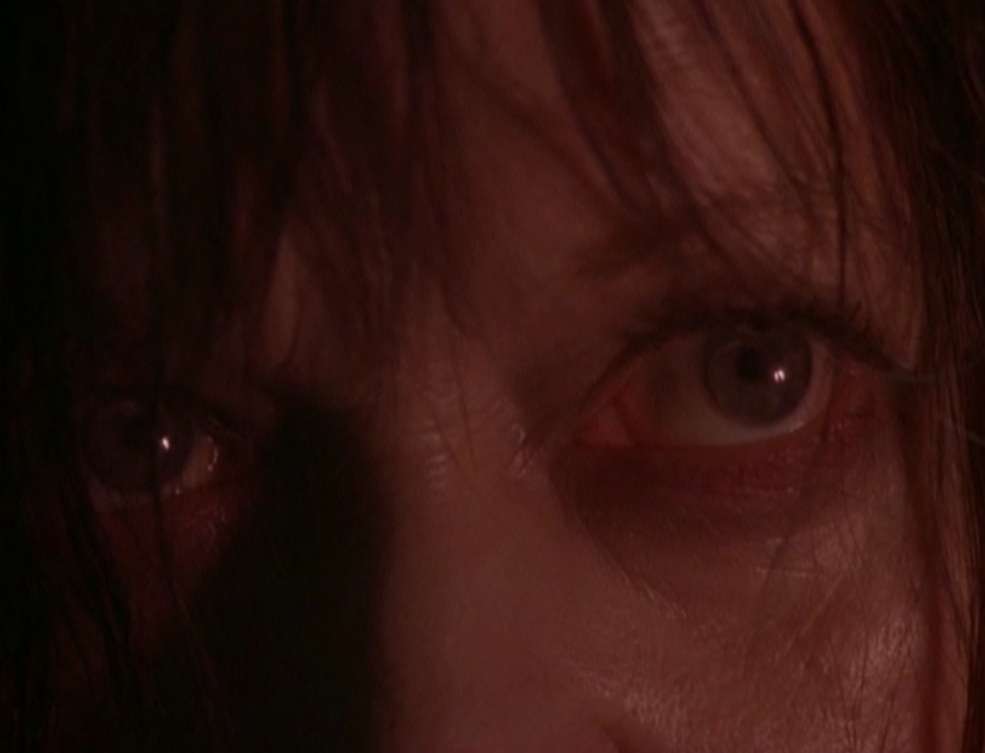
All of the parts in these two movies are acted by the people singing them (which is not always done with movies like these), and they do a really good job at both.  I especially want to give props to Leonie Rysanek in Elektra, who nails the title character and gives the most intense operatic performance that I have ever seen.


With special mention to Catarina Ligendza as Elektra's sister,
who really sells us on her gas pain.

And there are even good musical performances to boot! There is always a danger in any musical film that the director will be so caught up in how it looks that the music (you, know the important part) will suffer. Well, the music in these movies is superb which is a given considering that a) the orchestra for both is the Vienna Philharmonic and b) the conductor leading them in both is Karl Böhm, who was the student of the composer himself. All of the singers are first rate with not one dud in the casts.


Coming to CBS this fall: Hans Beirer and Astrid Varnay in
everyone's favorite new sitcom, Everybody Hates Herod!

I’m not going to go into the stories of these too much since they have been around for quite a long time (before being made into operas the stories of Salome and Elektra came from the Christian and Ancient Greek mythologies, respectively). Needless to say that if you want a story about a cute but disturbing spoiled teenage girl who decides that she’s not going to let anything get in her way of, like, totally making out with that *hot* wild religious guy and gets her way with bloody but like-the-dude-totally-had-it-coming-to-him results than Salome is the opera for you.

"*yawn* Being slutty and evil is such hard work."
But if you thought Salome was cute, wait ‘til you check out this little hottie


and her equally hot MILF of a mom

Who looks like something right out of Star Trek: The Next Generation.

who have a minor tiff because, well, Mom sort of murdered Dad a while ago and took a new lover to rule the kingdom and that makes her daughter *sad* and now she sort wants to, well you know, use her little brother to murder their mom in a plot that would make Freud deplete a box of Kleenex more rapidly than a kindergarten class in the middle of cold season. Did I mention that Elektra is a warm and fuzzy story? 

Whoa, whoa!  There was enough of that in the last opera, babe!

Watching these both back to back I have to say that Elektra is the better of the two, both musically and as a film – Salome actually almost seems like a warm-up. Everything in Elektra is expressionistic and done bigger and better. It has larger sets (it seems more spacious and real) that expand the drama, being less "stagy" than its predecessor.


Compare: above, Salome.  Below, Elektra.


It has better camera work and better dramatic unity.  That’s not to knock Salome; it is still one of the better opera films out there, it’s just it is merely very good whereas Elektra manages to impress me to the level where it has become for me not only a great opera film but a great film, period. Even if you don’t like opera (and why not? What’s wrong with hearing people sing their lines rather than speak them?) you should still see Elektra. Don’t be put off by people telling you that it’s some weird, dissonant opera. Yes, the music is revolutionary and does not really follow traditional operatic tonalities that much – this ain’t no Marriage of Figaro – but it is supremely dramatic and in some spots even beautiful.


Kinda like this blood orgy.

So take some time off this holiday season and do what I do to celebrate this joyous season: watch a demented princess strip for her perverted step-dad before making out with a severed head then watch a demented, vengeance driven princess obsess a little unhealthily about her dad for an hour or two. Come to think of it, both of these main characters are princesses… hey, why doesn’t Disney make some movies out of these two than add them to their Princess line of merchandise? Little girls would *so* love to have an Elektra doll, am I right?

Anyways, I leave you with the most Christmassy picture of all, and to all a good night.


Merry X-Mas!

Saturday, November 20, 2010

Well, How Did I Get Here?

Before I get to my next movie review, a short notice.  Due to the fact that I work retail and the Christmas shopping season is here (Black Friday is next week!  Yay!) I may not get to work on this blog as much as I’d like.  I will still watch and review stuff, but at a slower pace (no more 9-posts-per-month stuff) and more irregularly (meaning no more updating every week on Saturday like clockwork).  With that being said, let’s get to this week’s movie and


Theatrical Film, 1984
Director: Jonathan Demme


The Story
All of the mental patients in a state asylum seem to be sharing the same dream.  They all dream that they are mythic warriors in a fantasy kingdom chosen to do battle with the forces of darkness.  However – when they sleep in that world, they all dream that they are patients in an insane asylum.  Are all of these people insane?  Does it have to do with the drugs that they’re given by the doctors?  Or are they being attacked mentally by the evil sorcerer K’rush, who –

Nah, I’m just messing with you.  This is a concert movie of the band Talking Heads.

And the people in this movie aren’t insane.  Just on a lot of drugs.


Review
Talking Heads are one of my favorite rock bands.  In fact, I’ve been a Talking Heads fan since I was two years old, when my favorite song was “Psycho Killer.”  So there you go.  That explains a lot about me, doesn’t it?  I have grown up with this movie, or more accurately with the soundtrack of this movie – my parents had it on LP.  I used to own the first CD edition of it but got the expanded version a while back.  In fact, if they released a Super-Duper-Deluxo-Collector’s Edition where the only addition was an audio outtake of David Byrne farting on stage I’d probably buy that too.  I didn’t get the chance to see the actual movie until a few years ago when I found it on VHS (it had been out-of-print for a while by then, so it was a major find for me).  When the DVD came out I had to get that too.

Why?  Simple.  Stop Making Sense is my favorite concert movie.  There’s no bullshit here.  No audience reaction shots (at least until the very end).  No interviews backstage.  No fan interviews.  No flashy camerawork.  No cutaway sequences.  Just music.  Glorious, glorious music.  And one crappy song.  But more on that later.

I’m not going to over-analyze this movie, oddly enough.  Other people have done that.  If you wonder why David Byrne wiggles around on the stage the way he does or why the stagehands all wear black or why all the bandmembers come out one at a time or whatever, just do some research on the internet.  Or you can listen to the audio commentary on the DVD, I believe some of these questions are answered there… I don’t know for sure though as I have never listened to the commentary all the way through – I always switched back to the music.

This is the greatest concert movie ever, with some of the greatest rock music ever.  In fact, I don’t even think you could call this rock, since there are so many genres of music blended into this magnum opus.  Frontman David Byrne is a genius.  That word is thrown around way too much, but here it’s true.  He’s crazy and on drugs (in this movie at least) but the man is a genius.  In fact, I got the chance to see him on tour last year and he is just as awesome today as he was when he fronting the Heads.  The only time I have ever danced in public was at that concert (and I made a complete fool of myself as I tend to dance like a spastic idiot.  Oh well, I still had fun!)  If you ever get a chance to see him live do not pass it up.  Part of what makes this movie work though is not only the genius of the band (and the man fronting it) but the genius of the director as well.  Jonathan Demme knows how to use a camera in a rock concert.  He doesn’t get flashy or show off… he simply shows you what’s on stage.  This shows remarkable restraint and the movie is so much better for it.

The one down moment in Stop Making Sense though is the one song done by the side project of band members Chris Frantz and Tina Weymouth, The Tom Tom Club.  “Genius of Love” sucks.  And not just because of the song itself (which I have never liked) – It’s because it completely messes up the flow of the whole movie.  Before you’re grooving along to the music of Talking Heads and the subdued staging and the flow of it all and then suddenly you’re confronted with the hideous, hideous embarrassing vocal stylings of goofball doofus Chris Frantz and the over-the-top use of STROBE LIGHTS which jolts you right out of the movie and into pissed-off land.  In fact, speaking of the strobe lights, here’s an announcement I am compelled to make in complete seriousness (this is not a joke):

WARNING:  If you have epilepsy or are prone to epilepsy DO NOT watch “Genius of Love.”  The strobe lights used in this sequence will probably induce seizures and cause possible death. 

I found it extremely uncomfortable and I am not prone to epilepsy whatsoever.  In fact, you should probably skip this song altogether as it brings the movie to a grinding halt.

…Which luckily picks up again the moment David Byrne comes onstage again in his infamous Big Suit to sing “Girlfriend is Better.”  And the concert stays awesome ‘till the end.  Yay!

If I haven’t yet made it clear, see this movie.  It is the greatest rock concert movie ever.  Just skip “Genius of Love.”  Now if you’ll excuse me, I have to go dance spastically to the soundtrack again.


Screenshots

Note:  Merely looking at these screenshots is not enough to gauge this movie as it is a concert film, after all.  To get the best experience, get a copy of the soundtrack album or find some sound clips of the album on the internet and listen while looking at these pics.  You can call it "Stop Making Sense, the Mini-Experience."


Our frontman, David Byrne, looking like something out of a horror movie.  Creepy!

 
Even creepier, though:  bassist Tina Weymouth.  I don't know whether she is stoned throughout the entire concert or whether she's just really focused, but Ms. Tina just looks intense and only cracks a smile twice in the entire movie.  This is odd as everyone else looks like they're really getting into it and having a lot of fun.


Only this movie could make dancing with a lamp look completely natural.

Just an artsy pretentious shot from an artsy pretentious rock movie.

....I want ...a Big Suit....

A cool moment:  during "Girlfriend is Better" Byrne briefly offers the mike to one of the crew...

...then to you, the viewer!  Isn't that awesome?

I guess David is a big Linux fan.


Next Week:  I don't know.  I don't know anymore.  My life is so full of uncertainty!  I can't handle it anymore!!  I think I'm going to – hey!  Thanksgiving is right around the corner!  Alright!  PIG OUT!!

(Consumes mass quantities.  Sleeps in turkey-induced coma for a week)