Showing posts with label art. Show all posts

Friday, October 31, 2014

Turning Japanese

Today for Spooky Day something a little bit different: I usually gather up a few horror movies to review but today there will be only one movie... kind of.  See, today's film is an anthology film, made up of different stories with a common theme: ghosts.  Which is appropriate, really, since the name of the movie (in Japanese anyway) is "Ghost Stories".

1965
Director: Masaki Kobayashi 
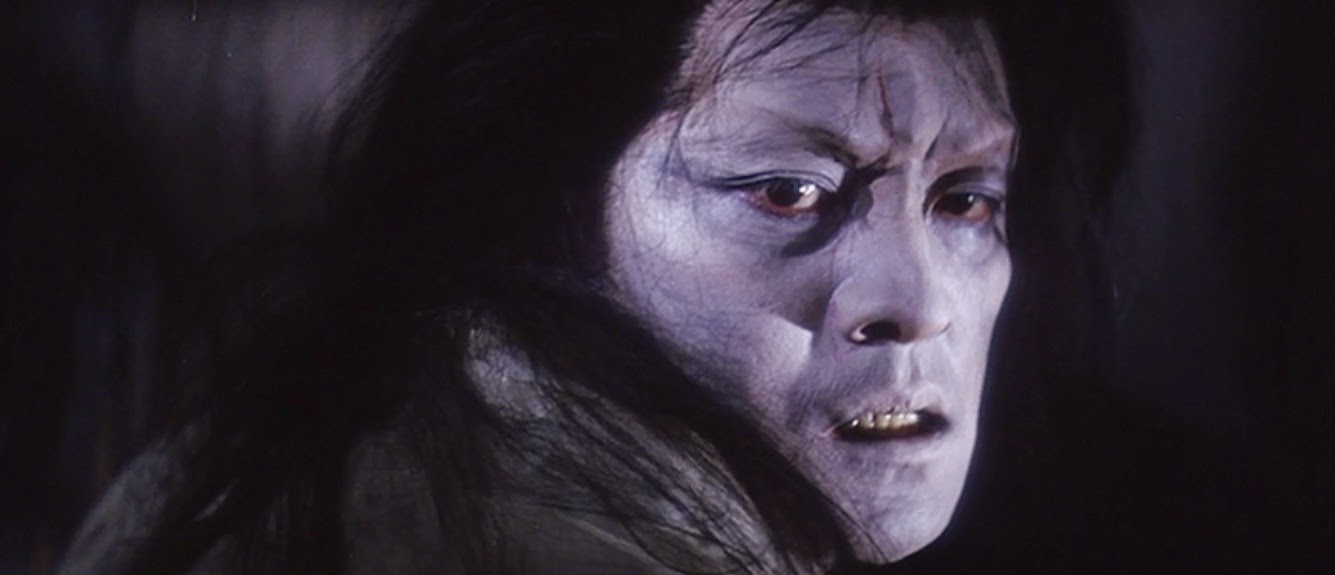

"The Black Hair" - This is the least satisfying tale in the bunch, but it's still pretty good.  Being the first one it sort of whets your appetite for the other three.  A samurai divorces his saintly wife to marry up into a successful family and get ahead on the social ladder.  After a while though he realizes that his new wife is a total bitch and he kind of misses his ex that he treated like total crap.  He returns home and this being a ghost movie everything goes about as well as you'd expect.


"The Woman Of The Snow" - A woodcutter is caught in a snow storm and watches his companion get the life sucked out of him by a scary lady snow vampire.  Instead of killing him though she lets him go after making him promise not to tell anybody - a little while later a mysterious stranger (hmmm) shows up in his life and marries him, being a perfect wife and never aging (HMMMMM).  One night he decides to tell her about that experience in the snowstorm many those many years before.  Things go about as well as you'd expect.
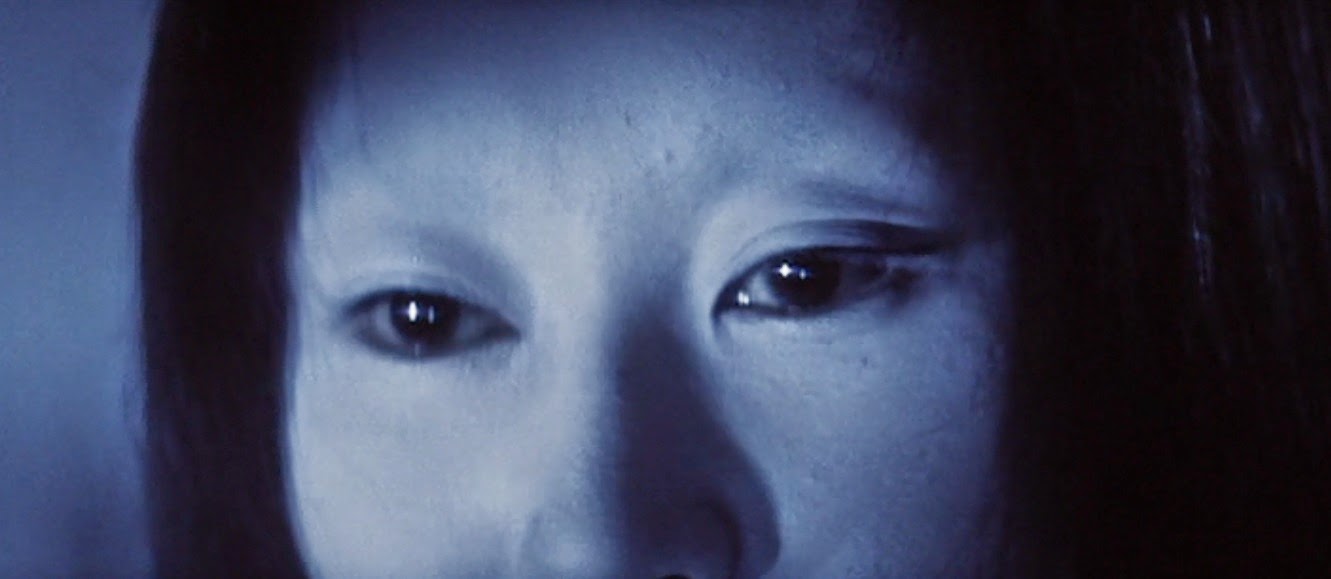

This one is more striking than the last - the sets are weird and very expressionistic, with sky-balls all over the place.  And damn is that one creepy snow-lady.


"Hoichi The Earless" - This one is the best of the bunch.  It's about a blind boy at a temple who is tempted by dead spirits to come and sing for them about the battle that they all died in.  After the temple priest gets hip to the whole thing (having your workers sitting in a graveyard singing all night is apparently not cool) he paints holy symbols on Hoichi to hide him from the restless ghosts... but forgets oooooone little area (if you need to guess than look at the title, fool).  Things go about as well as you'd expect.


This is the segment from this movie that everyone remembers and for good reason.  It could easily be a standalone movie, with awesome camerawork, atmosphere and acting.  Everyone also gripes about the title giving away the ending, but the point of this movie is not that you are surprised by what happens because you're not supposed to be.  The whole point is that you basically know what is going to happen - tragic events are inevitable and obvious, and the horror comes from the viewer knowing that something really bad is going to happen, it's just a matter of when.


"In A Cup Of Tea" - This one is just weird (and that's saying something).  A samurai drinks a cup of tea (or water, I mean it looked like water to me, but the title....) that has a face in it - later he is visited by a ghost who claims to be injured because of it.  The samurai tries to fight him and his ghostly minions.  Things go about as well as you'd - wait, no they don't because the story abruptly ends, and even though I just said that the movie isn't really about surprises I'm still not gonna say why because that would ruin the fun.


Kwaidan is not an in-your-face kind of horror movie.  It's more under-your-skin creepy.  It's atmospheric, beautiful and slow.  The version I watched had twenty minutes trimmed out (Criterion seriously needs to reissue this movie) and it was still over two-and-a-half hours long.  Every minute is gorgeous though.  They don't make horror cinema like this anymore.

Happy Halloween.

Friday, March 15, 2013

Ars On The Ides Of Mars

This month on Netflix I happened to watch two biopics about two artists, both based on novels, produced ten years apart, depicting men who lived roughly 300 years apart and who made two different types of art.  I hadn't actually intended to do this but once I watched both I started to draw some parallels and make some comparisons - as well as think about how one could be so good and one could basically suck.  Today I give you a short, badly written essay on a comparison and contrast of Magic Fire and The Agony And The Ecstasy, or "How To and How Not To Do a Biographical Movie About An Artist".

Magic Fire is about the life of Richard Wagner (whose bicentennial is this year, incidentally) made in 1955 by Republic Pictures, which by that time was on its last legs as a viable film studio.  The Agony and The Ecstasy is a film about Michelangelo Buonarroti and his painting of the Sistine Chapel ceiling produced in 1965 and starring Charlton Heston as the tortured artist and Rex Harrison as the warrior pope who commissions him to create the great work.

The difference between the two is like night and day.  Magic Fire is a cheesy biopic which tries to compress the entire life of the most important and influential composer of music next to Bach and Beethoven down into two hours and achieves in telling us nothing about the man or how monumental his work is and how it affected all of the art of the nineteenth century and beyond.  To director William Dieterle, the whole thing is just an exercise in showing how Wagner could be something of a vain egotist while making some pretty music and pining after a series of women, instead of showing how truly radical his ideas were, while maybe even showing some of the man's truly dark tendencies and his genuinely complex relationships with the other human beings in his life.  This movie could have been an opportunity to show the paradox of the artist and the dichotomy between what a man is and the art that he can produce.  But alas, Dieterle just gives us a shallow, melodramatic two hours of nothing.  There is no dramatic point to this massive cheese-beast.  The film zooms along from one point in Wagner's life to another - it all feels so scatter-shot.  The actors don't look like the historical personages that they are supposed to portray.  There are historical inaccuracies (a given in any historical picture).  Even the music, which should of course be a highlight is arranged by Erich Wolfgang Korngold in a choppy "best of" manner which never even lets us hear a whole selection before it's off into another cornily played bit from another opera. Oh well, at least it was filmed on location in Europe so some of the backgrounds are accurate (and pretty).

The Agony And The Ecstasy attempts to do the opposite - give us just one incident in the life of Michelangelo and build a dramatic conflict and exploration of an artist around it.  Directed by Carol Reed, this movie accomplishes what the last film does not.  We are presented with real questions - what drives an artist to create?  How far will he go to do it?  How does one find one's purpose in life?  How does the relationship of one person to another affect their work or vice versa?  What is the true impact of our lives on this world?  What the answers to some of these questions are of course will be up to the viewer which is the beauty of this movie - everything is not laid out on a platter and the viewer must find their own meaning.  The direction and the acting are better, too.  Charlton Heston gives a great account as Michelangelo, making him both sympathetic and infuriating, sometimes all at he same time.  Rex Harrison is of course basically Rex Harrison for the duration of the movie but manages to portray both Pope Julius' violent arrogance and surprising humility in the face of true art and beauty.  The interplay between the two is classic - this film works as a character study in itself in addition to the qualities I have mentioned.  They even manage the illusion of the Sistine Chapel being in the process of being painted, which must have been truly challenging.  The only things I didn't like were the tacked-on semi-romantic subplot (standard in movies of the 1950s and 60s but thankfully not overdone here) and the twelve minute art history lesson in the beginning.  It's rather clunky and unnecessary - I know who Michelangelo was and what his major works were, thanks.

In the end the recommendation is obvious - The Agony And The Ecstasy is a classic film worthy of any Netflix queue, whilst Magic Fire should be viewed by die-hard Wagner fans only, and only if they feel slightly masochistic... while getting a few chuckles from it over how corny it is.  And to all the directors out there not reading this I say:  when making a bio film of a great artist, try to focus on one work or point in their life and how it affected them and the world and try to give us some real drama out of it, instead of trying to cram the totality of their life and work into a short time-span, making everything empty and pointless.  

Ah, who am I kiddin'.